The challenge of promoting footwear online
Footwear is an extremely competitive niche online: countless small players compete for the market, alongside Ukraine’s e-commerce leaders (Rozetka, Intertop, Allo, Epicenter, and others) and international giants (Aliexpress, Amazon, Asos, Answer — and that’s just the letter A). The footwear market is a red ocean, so there aren’t many ways to survive: outright price wars, unlimited budgets, uniqueness (think Nike Air Jordan, or at least Citrus), visuals, and the product itself. Of course, you can’t do all of this at once, but you need at least 3 out of 5. You might wonder why a Google Ads case study starts with something else entirely — what does this have to do with it? Here’s why: I’m convinced that without context and an understanding of the market and marketing overall, you simply can’t judge any case objectively — without that, all the numbers are just numbers, with no sense of whether they’re good or bad. For example, in some niches it’s normal for every order to run at a loss and for ROI of 100% to be considered very good. Why? It’s simple: in a red ocean, every player is fighting for the repeat customer, because all the profit is in repeat orders. In that context, the job of Google Ads is to acquire a new customer and then nurture them further with remarketing, while the business’s job is to make sure the customer has a reason to come back and that the product’s advantages are undeniable. That synergy is what drives results, but quite often clients don’t realize this is their job too, thinking that ad setup alone determines the outcome. I’ve seen plenty of examples where the product and service were great but the ads were poorly configured — and results still followed. So I’d urge businesses to pay more attention to their product and service.
Setting up Google Ads for an online shoe store
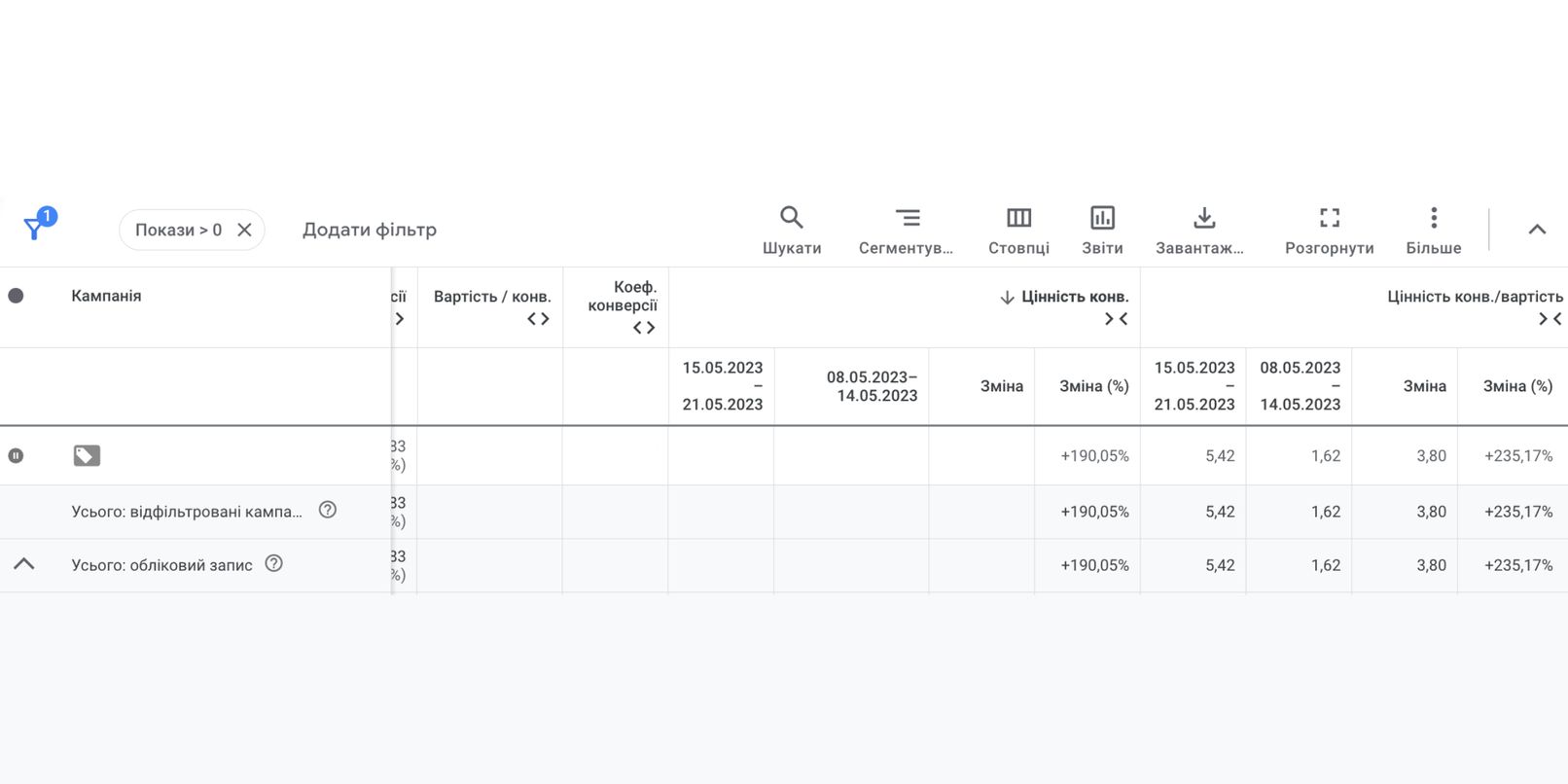
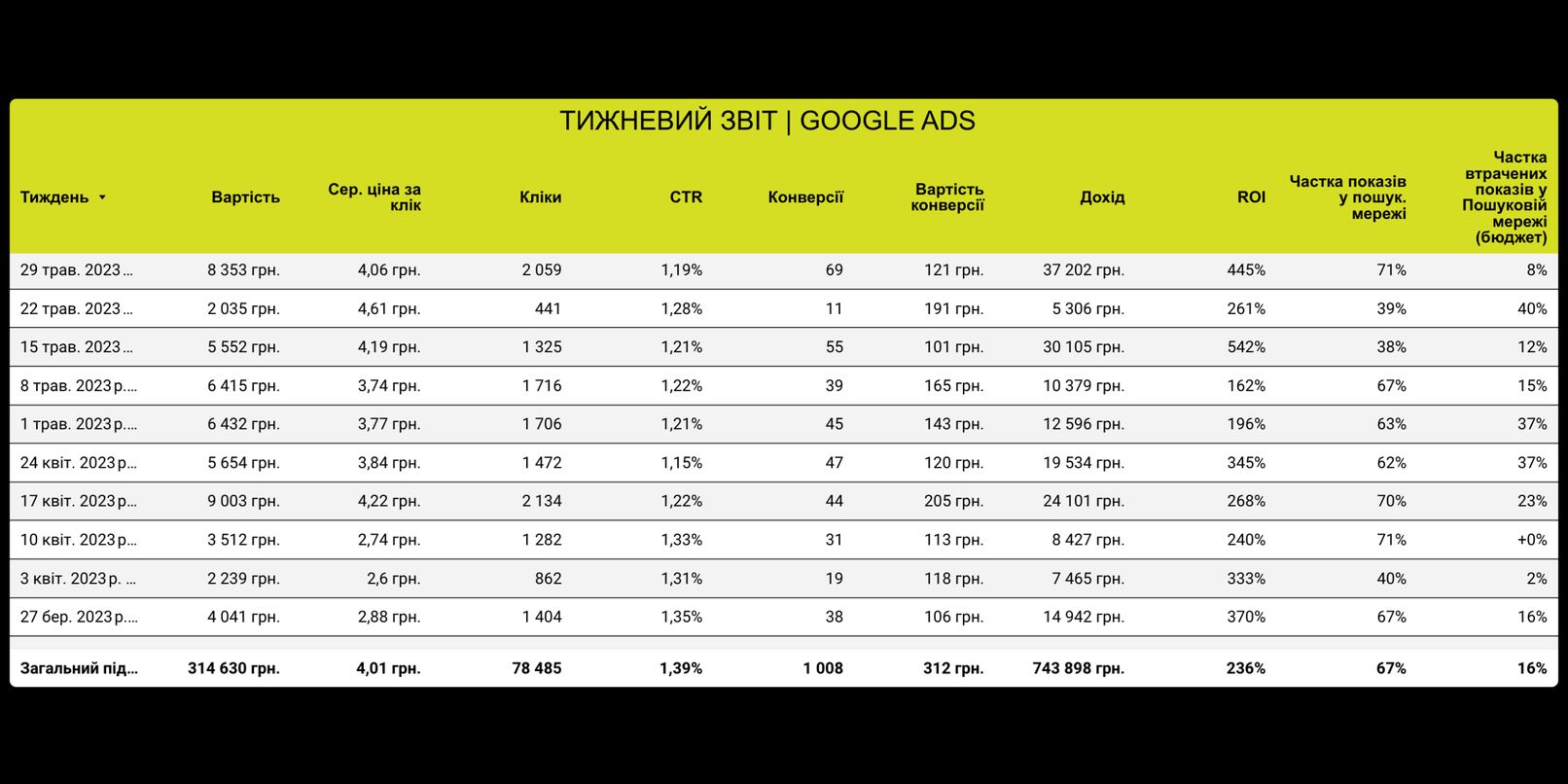
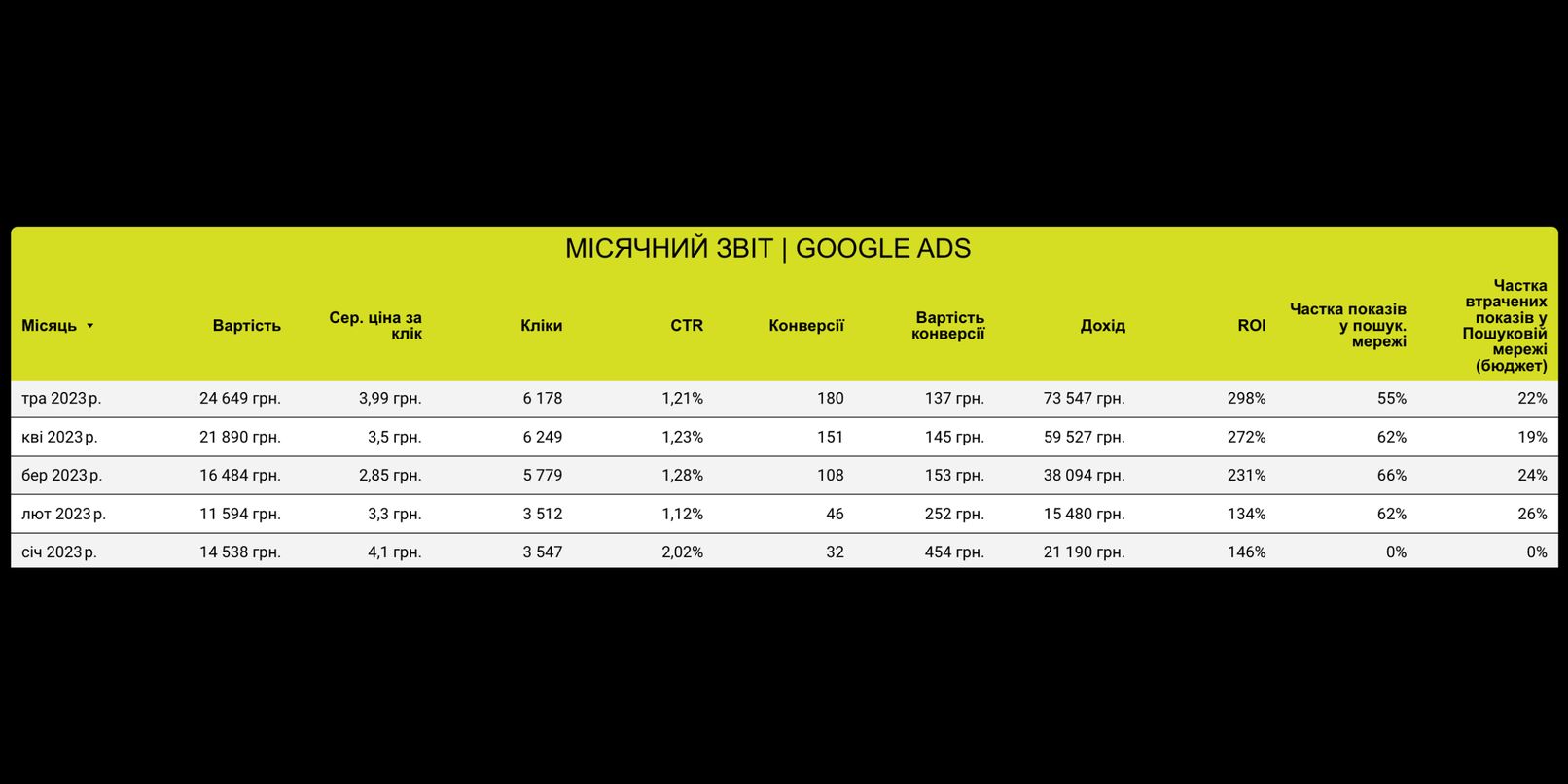
I think most people expect a case study to reveal some kind of spectacular setup, but for a specialist who’s been doing this for years, it all looks pretty ordinary — which makes case studies hard for me to write, since I do the same things every day and then have to describe them. There’s nothing extraordinary here either: we started with Google Shopping, aiming to keep tighter control over the ads at first and to study the search queries. Then, instead of Shopping, we launched Performance Max. I opened with a long introduction to make the point that you can’t just look at numbers without understanding the context — in the screenshot you’ll see weak results in early May, and you might assume it’s seasonality, but there were also stock and pricing issues on top of that. In the second half of May, the assortment, prices, and seasonality stabilized, which helped us reach a peak weekly ROI of 542%. Of course, the setup and Google’s learning phase played a role too, but not in isolation from reality. This is very much a mid-project case study — you won’t see a final result here, because the project is still ongoing, and I can’t share too many details without giving away the client. I think the numbers in the screenshot below are enough to draw your own conclusions. If you have questions, feel free to book a free consultation and I’ll be happy to go into more detail — see you then!
Screenshots